The essentials
- Multimeter: test voltage and continuity, and troubleshoot faults. An auto-ranging one is easiest for beginners.
- Ratchet crimper: for small terminals and connectors.
- Lug crimper: a hex or hydraulic crimper for battery lugs. Hammer crimpers work in a pinch but are harder to get right.
- Wire strippers and cable cutters: clean cuts and strips mean better crimps. Heavy battery cable needs proper cable cutters.
- Heat gun and heat shrink: seal every lug and joint against water and corrosion. Adhesive-lined heat shrink seals best.
- Terminals, lugs and fuses: keep a box of common sizes on hand.
- Screwdrivers, spanners, cable ties and a tape measure for a tidy install.
Nice to have
- Clamp meter that reads DC current, so you can measure what a fridge or charger is actually drawing.
- Insulated tools for working near battery terminals.
- Conduit, grommets and P-clips to protect and secure cable runs.
- A label maker so you know what every wire does later.
Spend where it counts
A good crimper and multimeter are worth paying a bit more for. Poor crimps are one of the most common causes of voltage drop, heat and intermittent faults in 12V systems. Do a pull test on every crimp: if it moves, redo it.
Safety basics
- Disconnect the battery before working on the wiring, and reconnect it last.
- Keep metal tools away from both battery terminals at once.
- Wear eye protection when cutting or crimping.
- Fuse every positive cable close to the battery.
Your first jobs
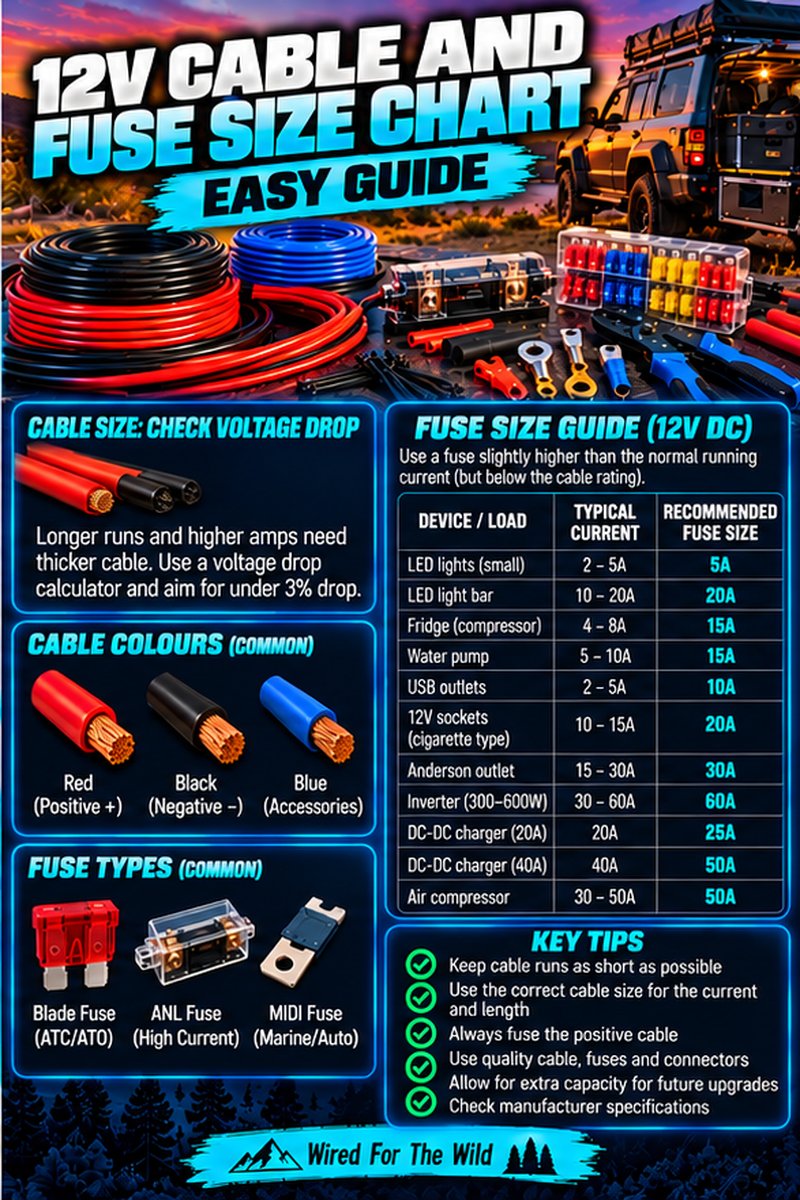
Start small, like adding a USB outlet or an Anderson plug fed from a fused circuit, before tackling a full dual battery install. Our cable and fuse guide shows how to pick cable and fuse sizes.
Gear picks
As an Amazon Associate I earn from qualifying purchases. Prices and availability are shown on Amazon.